your Fashion , food , lifestyle in one place
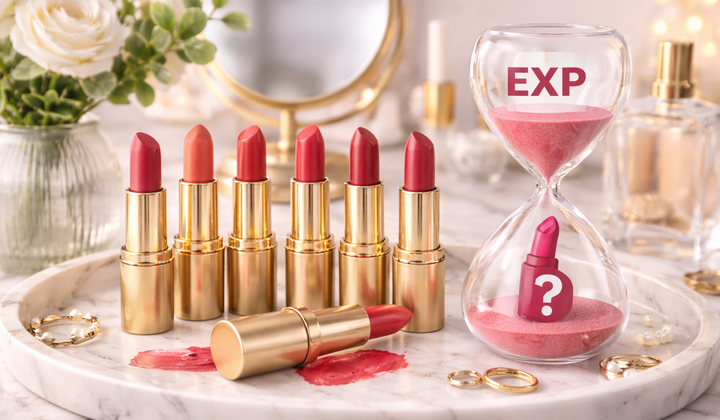
You reach for your favorite red lipstick only to notice it smells off, feels different, or looks separated. Should you use it anyway? When exactly do lipsticks expire, and how can you tell if yours has crossed that invisible line? These questions matter for two crucial reasons: your health and safety, and not wasting expensive products you genuinely love. This complete guide answers the critical question “how long do lipsticks last” with specific timelines for every formula type, clear expiration warning signs you can spot immediately, and storage tips to maximize your lipstick investment while keeping your lips safe. Let’s protect your lips, your health, and your wallet with the facts about lipstick shelf life.
The Standard Answer: Opened lipstick generally lasts 12-18 months, while unopened lipstick can last 2-3 years typically. However, numerous variables affect this baseline including formula type, storage conditions, and usage frequency. These are helpful guidelines, not absolute rules your specific lipstick may vary significantly.
Understanding the PAO Symbol: Look for the Period After Opening (PAO) symbol on your lipstick packaging a small jar icon with a number inside like 6M, 12M, or 18M. This indicates the manufacturer’s recommended safe use timeframe after opening the product. Always check this symbol first it’s your most reliable reference point from the brand itself.
Why Timeline Matters: Preservatives in lipstick formulas break down naturally over time. Bacteria accumulates from repeated application directly to lips. The chemical composition gradually degrades regardless of how carefully you store it. Visible color and texture changes indicate this breakdown process. Using expired lipstick isn’t just about quality degradation it’s genuinely about safety and lip health.
Factors That Affect Lifespan: Formula type (liquid versus bullet versus matte formulas behave differently), storage conditions (heat, direct light, and humidity all accelerate breakdown), application method (direct application versus using a lip brush), usage frequency, and contamination exposure all influence how long individual lipsticks actually last.
You will also like the French tip nails.
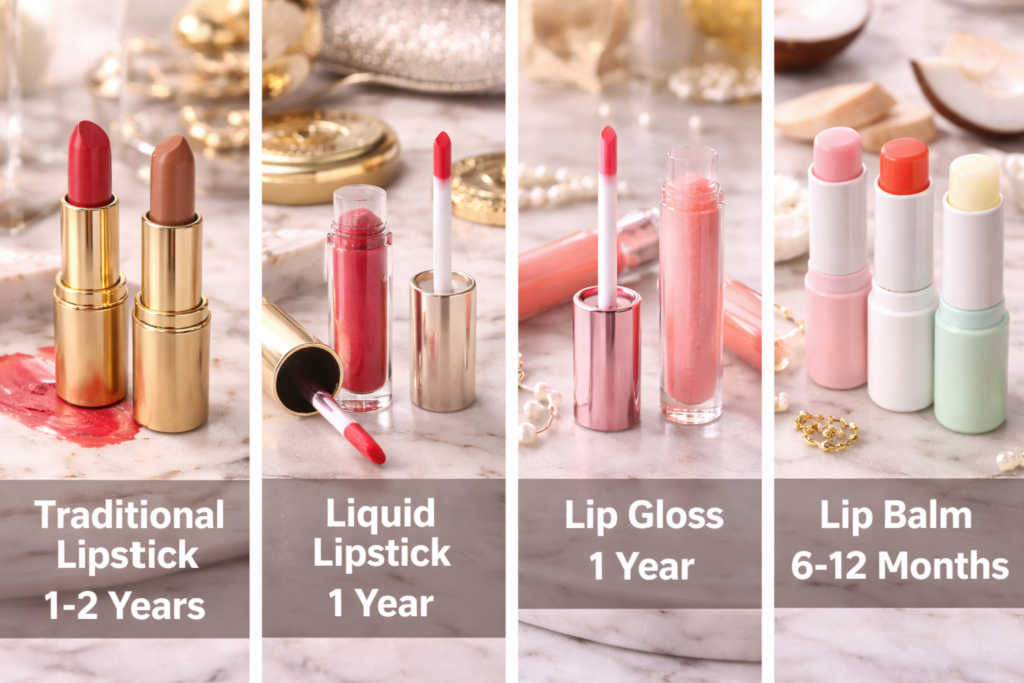
Different lipstick formulas have dramatically different shelf lives. Here’s exactly what to expect from each type.
Traditional Bullet/Stick Lipstick
Lifespan: 12-18 months after opening. Unopened: Up to 3 years. Why this timeline: Solid formula with fewer moisture-related issues, but oils can still oxidize and go rancid over time. Signs to toss: Rancid smell, beading or sweating on the surface, noticeable texture changes, or difficulty applying smoothly. This is the most stable lipstick formula and often genuinely lasts the full 18 months with proper storage.
Liquid Lipstick
Lifespan: 6-12 months after opening. Unopened: 18-24 months. Why this timeline: Liquid formula gets exposed to significantly more air and bacteria contamination via the dipping applicator with each use. Signs to toss: Visible separation of ingredients, thickening or thinning consistency, smell changes, or applicator degradation. Noticeably shorter lifespan than bullet lipsticks specifically due to liquid exposure and the repeated dipping motion.
Matte Lipstick
Lifespan: 12-18 months after opening. Unopened: 2-3 years. Why this timeline: Drier formula with less oil content means less bacterial growth potential. Signs to toss: Extreme dryness that makes application impossible, crumbling texture, or noticeable color shift from the original shade. Matte formulas often last slightly longer than cream formulas due to meaningfully lower moisture content.
Lip Gloss
Lifespan: 6-12 months after opening. Unopened: 18-24 months. Why this timeline: High moisture content combined with repeated dipping of the applicator wand creates ideal conditions for bacterial growth. Signs to toss: Sticky or excessively gummy texture, visible separation that won’t remix, cloudy appearance, or any off smell. This has the shortest lifespan of all lip products moisture plus repeated applicator contact equals bacteria heaven.
Lip Stain
Lifespan: 12-24 months after opening. Unopened: 2-3 years. Why this timeline: Alcohol-based formula acts as a natural preservative, extending usable life. Signs to toss: Completely dried out, dramatic color intensity fading, or separation that won’t remix. The alcohol content genuinely extends shelf life compared to other liquid lip products significantly.
Tinted Lip Balm
Lifespan: 6-12 months after opening. Unopened: 12-24 months. Why this timeline: Balm base can harbor bacteria, and many people apply with fingers directly rather than from a tube. Signs to toss: Rancid smell indicating oil oxidation, grainy or gritty texture, or color separation visible in the product. Pot-style balms applied with fingers expire faster than tube-style applications.
Lip Liner/Pencil
Lifespan: 12-24 months after opening. Unopened: 3+ years. Why this timeline: Dry formula, and regular sharpening physically removes the contaminated surface layer each time. Signs to toss: Won’t sharpen smoothly anymore, becomes dry and crumbly, or color payoff becomes poor. This is the longest-lasting lip product type sharpening is essentially like self-sanitizing with each use.
Cream Lipstick
Lifespan: 12-18 months after opening. Unopened: 2-3 years. Why this timeline: Contains higher moisture than matte formulas but lower than glosses, placing it in the middle. Signs to toss: Noticeable texture changes, sweating or beading on the surface, off smell, or color shift from original. This middle-ground formula delivers moderate shelf life between extremes.
LIPSTICK SHELF LIFE CHART:
Lip gloss: 6-12 months
Liquid lipstick: 6-12 months
Tinted balm: 6-12 months
Bullet lipstick: 12-18 months
Matte lipstick: 12-18 months
Cream lipstick: 12-18 months
Lip stain: 12-24 months
Lip liner: 12-24 months
Color Shifts: Fading or darkening from the original shade, white dots or film appearing on the surface indicating rancidity, or separation of color pigments visible in the tube. If your beloved red now looks distinctly orange, it’s definitely time to toss it without hesitation.
Texture Changes: Beading, sweating, or moisture droplets on the surface, dried out or crumbly consistency that makes application impossible, grainy or gritty texture you can feel, excessive softness or melting even at room temperature, or thick and clumpy appearance in liquid formulas.
The Rancid Test: Any off smell that seems stale or unusually chemical, a rancid or oily smell as lipstick oils oxidize over time, or anything that smells different from the original scent when new. Your nose genuinely knows trust your sense of smell when something seems wrong with your lipstick.
Formula Problems: Won’t apply smoothly anymore despite proper technique, patchy or streaky application where it used to glide beautifully, color payoff dramatically reduced from when new, causes unexpected lip irritation including itching, burning, or bumps, feels uncomfortable or sticky in ways it didn’t before, or won’t adhere properly to lips anymore.
Structural Issues: Bullet lipstick won’t twist up or down smoothly in the mechanism, breaks or crumbles with even slight pressure, liquid formula has separated completely and won’t remix even with shaking, or the applicator is visibly degrading or falling apart at the seams.
TOSS YOUR LIPSTICK IF:
Smells rancid or off
Color has changed significantly
Texture is beading, grainy, or separated
Causes irritation or burning
Past expiration date + showing signs
Broken and unusable
Preservative Breakdown: Lipsticks contain preservatives like parabens or phenoxyethanol that prevent bacterial and fungal growth. These preservatives break down naturally over time, progressively losing their effectiveness. Once preservatives fail completely, bacteria can flourish unchecked in the formula.
Oxidation: Oils and waxes in lipstick formulas oxidize when exposed to air during each use. This chemical process causes that characteristic rancid smell and texture changes you might notice. Heat and light exposure dramatically accelerate oxidation.
Bacterial Contamination: Your lips naturally harbor bacteria that transfer to the lipstick with each direct application. These bacteria multiply over time with repeated use, and sharing lipsticks multiplies contamination risk exponentially. Each application is essentially a tiny deposit of bacteria building up over months.
Chemical Degradation: Color pigments break down under light and heat exposure. Binders and emulsifiers separate as chemical bonds weaken. Overall formula stability becomes compromised over time. Like food, cosmetics are chemically active and degrade continuously they’re not inert substances.
Bacterial Infections: Staph infections are possible though genuinely rare. Fungal infections can develop on or around lips. Cold sores may be triggered if the herpes virus is present and reintroduced. Broken or chapped lips combined with bacteria create infection risk this is where the real danger lies.
Allergic Reactions: Degraded ingredients become increasingly irritating over time. Skin sensitivity increases to broken-down chemical compounds. Reactions include itching, burning, rash, or swelling. Even if you’ve used the product before without issue, an expired formula can cause new reactions you’ve never experienced.
Mouth Irritation: Cheilitis (lip inflammation) can develop from expired products. Cracking and painful peeling may occur. General discomfort and persistent pain signal problems. Your lips are mucous membranes they require and deserve careful, gentle treatment.
Most expired lipstick causes quality issues rather than medical emergencies let’s be honest about this. Risk increases significantly with very old products, visible contamination, or existing lip injuries. Immune-compromised individuals face higher risk than average. Not every expired lipstick causes infection, but the question remains: why take any risk at all?
When Medical Attention Is Needed: Persistent rash or swelling lasting days, lip infection with pus or extreme pain, fever developing after using questionable product, or infection spreading to surrounding facial areas. These situations are rare but serious seek medical care immediately if severe reactions occur.
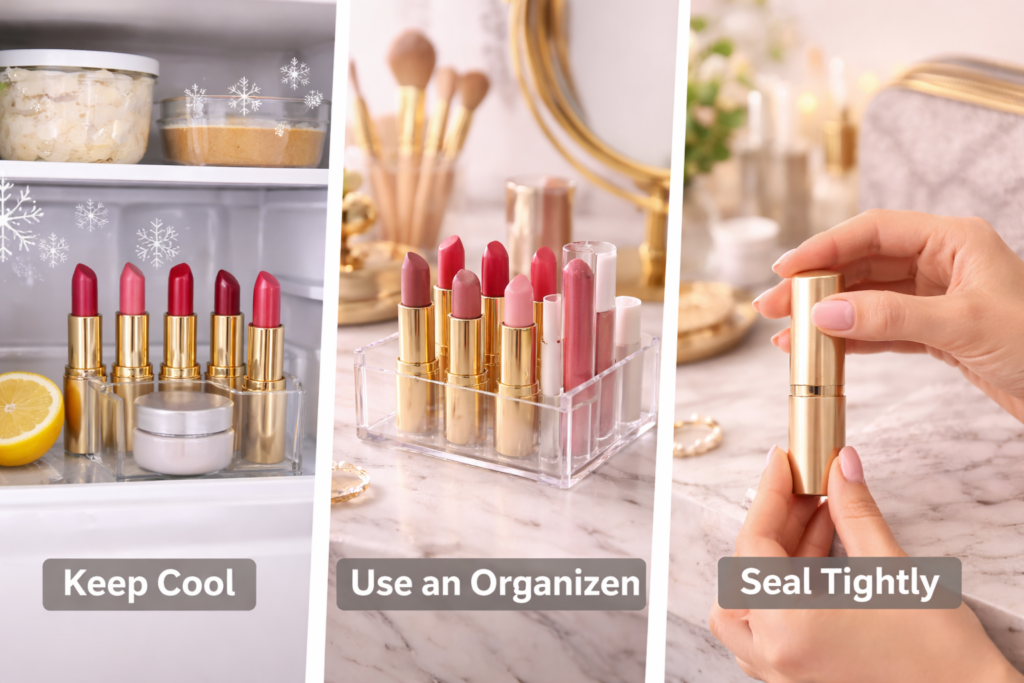
Temperature Control: Room temperature between 65-75°F (18-24°C) is ideal for most lipsticks. Avoid hot areas like windowsills, cars during summer, or bathrooms during showers. Never refrigerate lipsticks condensation creates moisture issues. Heat is lipstick’s primary enemy and dramatically accelerates breakdown.
Light Exposure: Store away from direct sunlight streaming through windows. UV light degrades color pigments rapidly. A drawer or makeup bag is significantly better than an open vanity display. Sunlight fades color intensity and breaks down formula chemistry.
Humidity Control: Bathroom storage isn’t ideal due to steam and moisture from showers. Bedroom drawers or cool closets are better alternatives. Always ensure caps are tightly closed after each use. Excess moisture encourages bacterial and fungal growth.
Clean Habits: Apply only to completely clean lips free from food, drinks, or lip balm residue. Use a lip brush instead of direct application when practical for reduced contamination. Never share lipsticks with anyone, ever. Wipe the bullet tip with a clean tissue after each use to remove surface contamination.
Sanitization Tips: Wipe bullet lipstick with 70% isopropyl alcohol monthly or after any illness. Let the alcohol dry completely before recapping. This practice extends usable life without damaging the formula. You cannot sanitize applicator wands on liquid lipsticks they require replacement when expired.
STORAGE BEST PRACTICES:
Room temperature (65-75°F)
Away from sunlight
Low humidity area
Caps tightly closed
Date opened with sticker
Clean lips before application
Never share lipsticks
Unopened Lipstick Benefits: Preservatives remain at full strength without degradation. No bacterial contamination has occurred yet. Zero air exposure means no oxidation. Most unopened lipsticks last 2-3 years typically, with some lasting up to 5 years under perfect conditions. Factory-sealed truly means maximum possible freshness.
Once Opened: The preservation countdown begins immediately upon first use. Air exposure starts the oxidation process running. Bacteria get introduced with the very first application. Preservatives begin their inevitable breakdown. The opening date matters far more than the purchase date for tracking expiration.
Storage Matters More When Unopened: Cool, dark storage becomes critical for extending unopened life. Products can exceed 3 years if stored under perfect conditions. Still check carefully for expiration signs before using very old unopened lipsticks age affects everything eventually.
Recommendation: Start your mental 12-month clock from the opening date, not purchase. Write the opening date on the bottom with permanent marker for easy tracking. Check condition visually and with smell test regardless of how much time has passed. Visual and smell tests supersede timeline rules every time.
UNOPENED VS. OPENED:
Unopened bullet lipstick: 2-3 years
Opened bullet lipstick: 12-18 months
Unopened liquid lipstick: 18-24 months
Opened liquid lipstick: 6-12 months
Unopened lip gloss: 18-24 months
Opened lip gloss: 6-12 months
1. After Illness: Discard any lipstick used during a cold sore outbreak, flu, strep throat, or any mouth infection. Lip products used during illness are contaminated and can cause reinfection. Bacteria and viruses genuinely survive on lipstick surfaces for extended periods.
2. Visible Contamination: Any mold or fuzzy growth anywhere on the product, separated formula that absolutely won’t remix despite shaking, or extreme color change from the original shade. If it looks fundamentally wrong, it is wrong trust your eyes.
3. Severe Texture Changes: Completely dried out to the point of being unusable, crumbling or falling apart with gentle handling, or gummy and sticky when the formula type shouldn’t be. Unusable equals time to replace without question.
4. Strong Off Smell: Chemical odor that wasn’t present when new, rancid or oily smell indicating lipstick breakdown, or anything that genuinely smells wrong to your nose. The nose test is absolutely non-negotiable.
5. Causes Irritation: Burning, stinging, or itching sensations during or after wear, rash or bumps developing on or around lips, or swelling and redness that persists. Your body is clearly telling you to stop using that product.
6. Past Expiration Plus Any Signs: If the lipstick is old and showing even one warning sign, apply the better-safe-than-sorry principle. One red flag on an old lipstick means toss it immediately.
7. Unknown Age: Can’t remember when you opened it, found it in an old makeup bag without context, or inherited or received gifted used lipstick. When in genuine doubt about age or history, throw it out.
THROW AWAY IMMEDIATELY:
Used during illness
Smells rancid or off
Drastic color change
Visible mold or separation
Causes irritation
Can’t remember age
Old + showing signs
Smart Usage Habits: Apply only to clean lips free from any food residue. Use a lip brush instead of direct application when practical to reduce contamination. Recap immediately after every use to minimize air exposure. Don’t pump bullet lipstick up and down this introduces unnecessary air. Small daily habits genuinely add months to usable shelf life.
Maintenance Tricks: Wipe the bullet tip with a clean tissue after each application. Perform monthly alcohol sanitization using 70% isopropyl alcohol. Sharpen lip liners regularly, which physically removes the contaminated surface layer. Store upright rather than on sides to maintain proper shape. Clean product equals longer-lasting product it’s that simple.
Purchase Smart: Buy smaller sizes if you’re a slow user who takes months to finish products. Avoid “stocking up” on lipsticks during sales they expire whether used or not. Consider travel sizes for infrequent shades you wear occasionally. Match purchase quantity to your actual realistic usage patterns.
Tracking System: Label each lipstick with its opening date using a small sticker on the base. Keep an inventory list with opening dates if you’re organized. Set phone reminders to check on old lipsticks periodically. Organization genuinely prevents waste and expired product use.
What NOT to Do: Don’t share lipsticks even with close family members. Don’t leave products in hot cars during summer. Don’t store in humid bathrooms with regular steam exposure. Don’t try to “save” visibly contaminated or rancid lipstick some products aren’t worth the risk of saving.
Q: Can I use lipstick past the expiration date if it looks and smells fine?
A: If the lipstick is only slightly past expiration by 1-3 months, shows absolutely zero signs of breakdown, and has been stored properly, it’s likely safe to use. However, preservatives may have degraded invisibly, reducing bacterial protection even without visible signs. Perform thorough smell, visual, and texture tests. If you have sensitive skin or any doubts whatsoever, replace it. The risk versus replacement cost calculation is ultimately personal.
Q: How can I tell when I opened my lipstick?
A: Write the opening date on the bottom with a permanent marker or small label sticker immediately upon opening. Many makeup enthusiasts photograph new products with the purchase date visible. You can also maintain a spreadsheet or note on your phone tracking openings. Retroactively estimate based on purchase date if you forgot to track initially if you genuinely can’t remember, assume it’s been too long.
Q: Do expensive lipsticks last longer than drugstore ones?
A: Not necessarily this is a common misconception. Shelf life depends primarily on formula type, preservatives used, and storage conditions not price point. Both luxury and drugstore brands use similar preservation systems regulated by cosmetic safety standards. Higher-end brands may use slightly more stable ingredients, but the difference is genuinely marginal. Storage conditions and hygiene habits matter infinitely more than cost.
Q: Can I revive a dried-out lipstick?
A: For bullet lipsticks, you can add a tiny bit of petroleum jelly, coconut oil, or vitamin E oil, then microwave for 3-5 seconds to remix everything. This changes the original formula and may reduce longevity further, but makes it temporarily usable. For liquid lipsticks, adding drops of makeup setting spray can thin thick consistency. However, if lipstick dried out due to age rather than storage, revival is only temporary replacement is the better long-term solution.
Q: Is it safe to use my mom’s or grandma’s vintage lipstick?
A: Generally no this isn’t recommended. Lipsticks over 5-10 years old have completely degraded preservatives, rancid oils, and potential bacterial growth even if factory-sealed. Vintage lipstick formulas also predate modern safety standards and testing. If you want to keep vintage lipstick for sentimental or collectible value, absolutely don’t use it on your lips. Nostalgia genuinely isn’t worth a lip infection or allergic reaction.
Q: Do matte lipsticks really last longer than glossy ones?
A: Yes, typically they do. Matte formulas contain less moisture and oil, creating a less hospitable environment for bacterial growth. Glosses, with their high moisture content and repeated applicator dipping, expire fastest at 6-12 months. Mattes can last the full 12-18 months when stored properly. The difference isn’t dramatic but is definitely noticeable with careful observation.
Q: Should I throw away all my lipsticks during cold and flu season?
A: Only discard the specific ones you used during active illness. If you stayed healthy throughout the season, your lipsticks remain fine to use. When sick, either use disposable lip products or designate one “sick lipstick” to toss after recovery. Sanitizing with 70% alcohol after minor illness like a mild cold can work, but severe infections warrant complete replacement for safety.
Understanding how long lipsticks last protects both your health and your investment in quality makeup you genuinely love. While timelines vary significantly by formula type from just 6 months for lip gloss to 24 months for lip liners your nose, eyes, and common sense are ultimately the final judges of safety. When in genuine doubt about any lipstick’s condition, throw it out without hesitation. No lipstick, regardless of cost or sentimental value, is worth risking lip irritation or infection. With proper storage in cool, dark conditions, consistent hygiene habits, and regular lipstick shelf life checks, you can safely enjoy your entire lipstick collection while knowing exactly when each tube has reached its natural end. Your lips and your overall health deserve fresh, safe products always.
You will also like the lip flip before and after.


Kesha Smith is a lifestyle blogger passionate about simple living, healthy habits, and everyday inspiration. On this website, you’ll find