your Fashion , food , lifestyle in one place
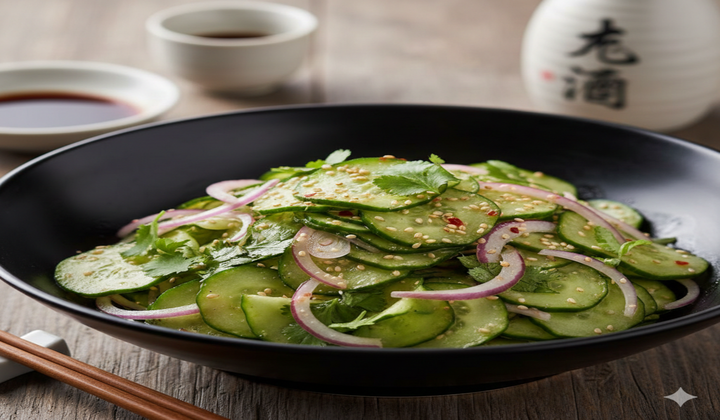
The Gyu Kaku cucumber salad recipe is one of those dishes that diners remember long after a Japanese barbecue meal ends. Light, crisp, and refreshing, it provides the perfect contrast to rich grilled meats. Many fans of Gyu-Kaku look for ways to recreate this familiar side dish at home, especially because of its clean flavor and simple ingredients.
This article offers a inspired-by version of that salad, rooted in the traditional Japanese dish known as sunomono. It is not an official or endorsed recipe. Instead, it focuses on respectful technique, balance, and clarity so home cooks can enjoy a Japanese restaurant–style cucumber salad in their own kitchens.
Gyu-Kaku’s cucumber salad is a light vinegar-based dish commonly served as a starter or side at Japanese barbecue restaurants. It is refreshing, mildly sweet, and gently tangy, designed to cleanse the palate.
This cucumber salad closely follows the principles of traditional sunomono, which focuses on light vinegar dressing, clean ingredients, and balanced flavor. The use of rice vinegar, gentle sweetness, and chilled serving style reflects classic Japanese preparation methods.
Sunomono refers to Japanese dishes dressed with vinegar (su). These dishes are known for their lightness and balance rather than bold seasoning.
Cucumbers absorb dressing well while retaining crunch, making them ideal for vinegar-based salads. Variations exist across regions and households in Japan.
Gyu-Kaku’s cucumber salad is widely enjoyed because it delivers refreshment, balance, and simplicity alongside rich barbecue dishes.
The salad tastes clean and crisp, helping refresh the palate between bites of grilled meats without feeling heavy or filling.
A gentle mix of vinegar, sugar, and sesame creates harmony rather than sharpness, making the flavor smooth and easy to enjoy.
Its acidity cuts through the richness of barbecue items, providing contrast that enhances the overall meal experience.
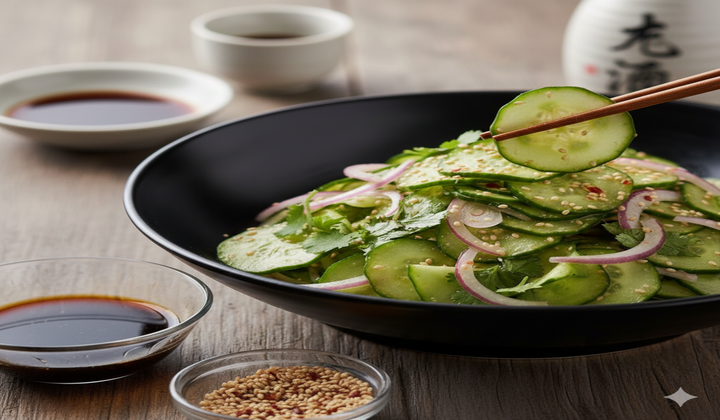
The charm of this cucumber salad lies in its contrast of crisp texture and clean, balanced flavor. Each element plays a role in keeping the dish light and refreshing.
Thinly sliced cucumbers stay firm and crunchy, especially after proper salting and draining, which removes excess moisture without softening the flesh.
Rice vinegar adds gentle acidity that brightens the salad without sharpness, keeping the flavor refreshing rather than sour.
A small amount of sugar softens the vinegar, while sesame oil or seeds contribute a light nutty aroma that rounds out the overall taste.
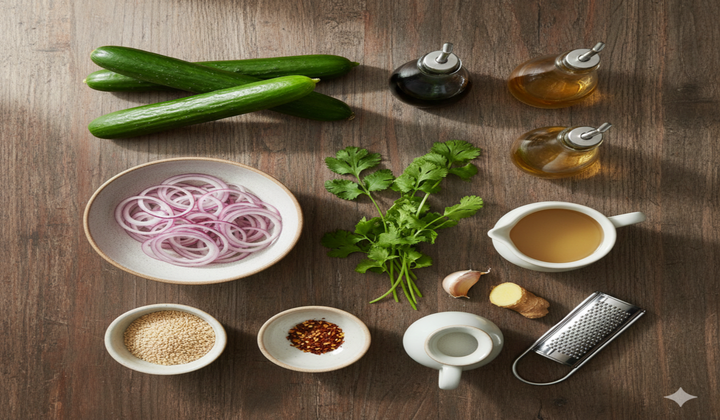
This Japanese-style cucumber salad uses a small number of ingredients, each chosen to maintain balance, freshness, and clean flavor.
Japanese or Persian cucumbers are preferred because they are crisp, thin-skinned, and contain fewer seeds. English cucumbers also work well when sliced thinly and properly drained.
Rice vinegar is traditionally used for sunomono. It provides mild acidity with a slightly sweet profile, making it gentler than stronger vinegars.
Sugar helps balance the vinegar’s tang, while salt draws out excess moisture from the cucumbers. Together, they help create proper flavor and texture.
Sesame oil or sesame seeds add subtle nuttiness and aroma. Only a small amount is needed to enhance flavor without overpowering the salad.
Wakame seaweed or chili flakes can be added for variety. These ingredients introduce extra texture or gentle heat while keeping the dish light. All quantities are adjustable based on taste.
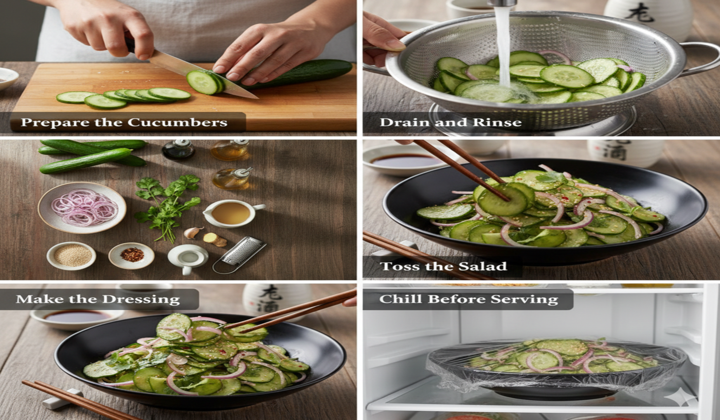
This inspired-by recipe focuses on recreating the light, refreshing balance found in Japanese restaurant cucumber salads. By using simple ingredients and proper preparation techniques, it delivers crisp texture, gentle acidity, and clean flavor ideal for serving as a chilled side dish.
Optional:
Salting and draining the cucumbers removes excess moisture while keeping them crisp. This step prevents the dressing from becoming diluted and ensures balanced flavor.
Rice vinegar should taste gentle, not sharp. Using the right amount maintains brightness without overwhelming the natural cucumber flavor.
Allowing the salad to chill briefly helps flavors meld. Over-chilling should be avoided, as cucumbers can lose their crisp texture.
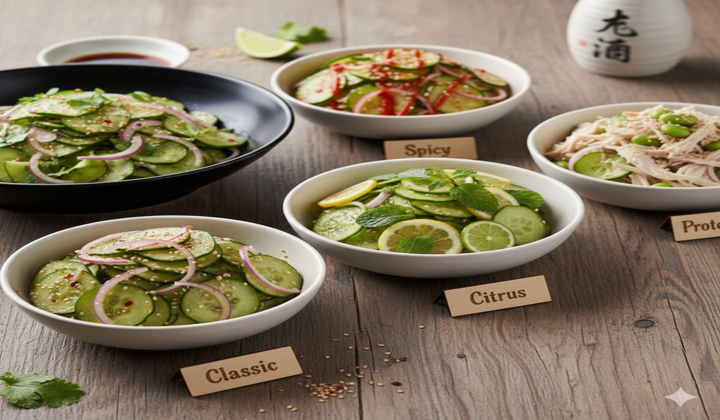
While sunomono is traditionally simple, small adjustments are commonly made at home and in restaurants to suit taste preferences without losing its light character.
Adding rehydrated wakame seaweed provides soft texture and subtle umami flavor. This variation is widely used in Japanese cuisine and adds visual contrast while keeping the salad refreshing.
A small amount of chili flakes or chili oil introduces gentle warmth. The heat should remain mild, enhancing the vinegar flavor rather than overpowering the cucumbers.
Reducing the sugar allows the vinegar’s brightness to come forward. To keep balance, slightly increasing sesame oil or seeds helps maintain depth without sweetness.
Without salting, cucumbers release water after mixing, which dilutes the dressing. Proper salting removes excess moisture and helps the flavors stay balanced.
Adding too much sugar can overpower the vinegar and make the salad heavy. Sunomono should taste light, gently sweet, and refreshing.
Strong vinegars like distilled white vinegar are too sharp for this dish. Rice vinegar is essential for achieving mild acidity and authentic flavor.
No. This is not an official or restaurant-endorsed recipe. It is a inspired-by version created for home kitchens, using traditional Japanese techniques to recreate a similar flavor and dining experience.
Japanese or Persian cucumbers work best because they are thin-skinned, crisp, and contain fewer seeds. English cucumbers also work well when sliced thinly and properly salted before mixing.
Yes, sunomono can be prepared a few hours in advance. For best texture and flavor, keep it chilled and serve the same day, as cucumbers may soften if stored too long.
No. Sweetness varies by recipe and household preference. Some versions use very little sugar, focusing more on vinegar brightness and sesame flavor rather than noticeable sweetness.
The Gyu-Kaku cucumber salad recipe and Pioneer Woman ramen noodle salad recipe stands out because of its simplicity and balance. Crisp cucumbers, gentle acidity, and subtle sweetness come together in a dish that refreshes rather than overwhelms.
By using a respectful, Japanese restaurant–style Gyu-Kaku cucumber salad recipe approach inspired by traditional sunomono, home cooks can enjoy this light and elegant salad anytime. It’s a reminder that some of the most memorable dishes rely not on complexity, but on thoughtful technique and balance.
You will also like the Kronk’s spinach puffs recipe.


Kesha Smith is a lifestyle blogger passionate about simple living, healthy habits, and everyday inspiration. On this website, you’ll find