your Fashion , food , lifestyle in one place
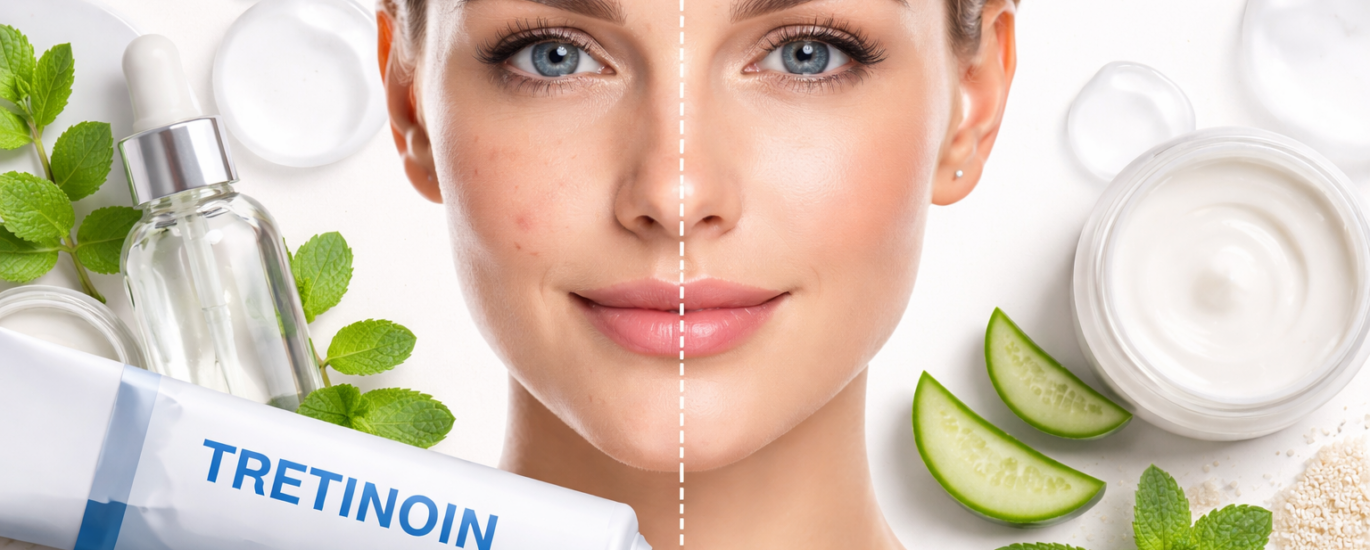
Tretinoin before and after photos reveal one of the most dramatic skincare transformations possible clearer, smoother, more radiant skin that looks like you’ve invested in expensive treatments, when it’s actually a single prescription cream. As the gold standard retinoid recommended by dermatologists worldwide, tretinoin delivers results that over-the-counter products simply can’t match. But what do real tretinoin results look like, and how long does the transformation actually take? This comprehensive guide walks you through the complete tretinoin journey: month-by-month timeline, proper application techniques, managing the dreaded purge phase, building a compatible routine, and achieving that coveted radiant glow. Results are real but require patience, consistency, and proper technique there’s no shortcut to beautiful skin. Let’s explore how to achieve that flawless tretinoin glow safely and effectively.
Medical Disclaimer: Tretinoin is a prescription medication. This article is for informational purposes only and does not constitute medical advice. Always consult with a board-certified dermatologist before starting tretinoin. Individual results vary significantly, and this content should not replace professional medical consultation. Tretinoin is contraindicated during pregnancy and breastfeeding.
Tretinoin is a prescription-strength retinoid a vitamin A derivative and the generic name for Retin-A. Unlike over-the-counter retinol, tretinoin is retinoic acid in its pure, active form, requiring no conversion by your skin. It’s FDA-approved for treating acne and photoaging, and dermatologists often call it “the only topical proven to reverse signs of aging” with decades of research backing its effectiveness.
How Tretinoin Differs from Other Retinoids: Tretinoin is prescription-strength and works immediately in its active form, while retinol is over-the-counter and must convert to retinoic acid first making tretinoin approximately 20 times more potent than retinol. This means tretinoin works faster and shows more dramatic results. Compared to adapalene (Differin), another prescription retinoid, tretinoin is more powerful for anti-aging though adapalene is better tolerated and less irritating, primarily targeting acne. Tazarotene is the most potent prescription retinoid but also the most irritating, while tretinoin offers a middle ground of efficacy and tolerability.
Common Brand Names: Retin-A (the original formula), Retin-A Micro (time-release formulation), Renova (marketed for aging), Refissa, and generic tretinoin which offers the same effectiveness at lower cost.
Prescription Requirement: You cannot buy tretinoin over-the-counter a dermatologist or doctor must prescribe it. It’s available in 0.025%, 0.05%, and 0.1% strengths in cream, gel, or micro formulations. This prescription requirement exists because tretinoin is a powerful medication requiring professional oversight for safe, effective use.
You will also like the French tip nails.
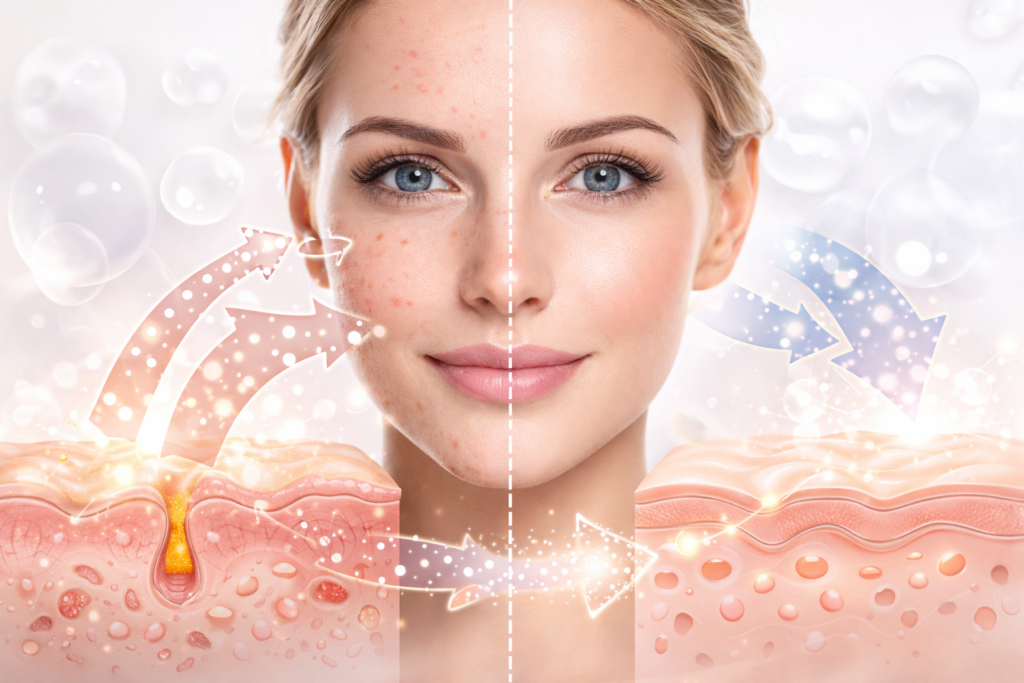
Tretinoin creates remarkable tretinoin skincare results through multiple mechanisms working simultaneously in your skin.
Increases Cell Turnover: Tretinoin dramatically accelerates your skin cell renewal cycle. While normal skin turnover takes 28-40 days, tretinoin speeds this to 14-21 days, shedding dead skin cells faster and revealing fresh, new skin underneath continuously.
Boosts Collagen Production: It stimulates fibroblasts the cells responsible for making collagen increasing both collagen and elastin production. This thickens the dermis (deeper skin layer), reduces fine lines and wrinkles, and creates the anti-aging mechanism proven by decades of scientific research.
Unclogs Pores: Tretinoin prevents dead cells from clogging pores, reduces come dones (blackheads and whiteheads), and prevents acne formation before it starts. This is why it’s uniquely effective for both acne treatment and anti-aging it addresses the root cause of clogged pores.
Fades Hyperpigmentation: By speeding removal of pigmented cells and inhibiting melanin production, tretinoin evens skin tone and reduces dark spots, melasma, and post-inflammatory hyperpigmentation.
Improves Texture: The combined effect smooths rough, bumpy skin, refines the surface, and shrinks the appearance of pores, creating that smooth, glass-skin effect that makes skin look airbrushed.
The result is clearer, smoother, more even-toned skin with reduced fine lines and wrinkles, improved texture, and increased radiance which is precisely why dermatologists call it the gold standard in skincare.
Understanding realistic tretinoin before and after timelines is crucial for success. Here’s exactly what happens at each stage.
Your skin looks the same or possibly slightly worse during this initial phase. You’ll notice the beginning of dryness and flaking, possible mild redness, but absolutely no improvement in acne, wrinkles, or texture yet. This is completely normal don’t give up! What’s happening beneath the surface is crucial: your skin is adjusting to increased turnover, the retinization process is beginning, and cell renewal is speeding up. The transformation is happening where you can’t see it yet.
This is the tretinoin purge the most challenging phase where many people quit. Your breakouts may increase dramatically as deep clogged pores come to the surface. Dryness, peeling, and flaking intensify. Redness and sensitivity increase noticeably. Your skin may genuinely look worse than when you started. This purging happens because faster cell turnover brings existing congestion to the surface rapidly it’s not new acne formation. The purge typically lasts 4-6 weeks and is temporary proof that tretinoin is working. Push through it gets dramatically better!
The purge starts subsiding, and you’ll finally see early tretinoin results. Breakouts decrease in frequency, skin texture begins smoothing noticeably, and there’s a slight improvement in overall radiance. Less dryness occurs as your skin adjusts to the medication. You’ll notice makeup applies smoother, skin feels softer to touch, pores look slightly smaller, and active breakouts heal faster than before. These are the first glimpses of your tretinoin glow!
This is when the dramatic tretinoin before and after difference becomes undeniable. You’ll see significant improvement in skin texture, noticeable reduction in acne, fading of post-acne marks and hyperpigmentation, more even skin tone, and increased radiance and glow. This is when people start complimenting your skin without knowing you’ve changed anything.
For anti-aging: fine lines begin softening visibly, skin looks plumper and firmer, elasticity improves, and you’ll notice a more youthful appearance overall. For acne: fewer breakouts occur, healing is dramatically faster when breakouts do happen, less scarring develops, and your overall complexion is clearer. This phase showcases why tretinoin is considered transformative.
Maximum improvement in all skin concerns becomes apparent. The dramatic before and after difference is clearly visible in photos. Skin texture is smoother and more refined than you’ve had in years. Fine lines are reduced by 20-40%, acne is reduced by 50-80%, hyperpigmentation has lightened significantly, pore appearance is minimized, and overall skin quality is dramatically improved. This is the full retinoid transformation the coveted “tretinoin glow” everyone talks about.
Continued improvement occurs, though more gradually than initial months. You’ll experience prevention of new aging signs, sustained clarity and smoothness, ongoing collagen production, and maintenance of results plus continued prevention. This is why many dermatologists use tretinoin for decades it’s an investment in long-term skin health.
Important Timeline Notes: Results vary significantly by individual. Consistency is absolutely crucial for success. Your strength and formulation affect the timeline. Some see results faster, others slower everyone’s skin is genuinely different, so patience is essential.
Realistic Before and After Expectations by Concern:
For Acne: Before shows active breakouts, clogged pores, and uneven texture. After shows clear or significantly clearer skin, faster healing, and prevention of new breakouts.
For Aging: Before shows fine lines, dull skin, and rough texture. After shows smoother skin, reduced lines, improved firmness, and radiant glow.
For Hyperpigmentation: Before shows dark spots, melasma, and uneven tone. After shows faded marks, more even complexion, and brighter overall skin.
For Texture: Before shows rough, bumpy skin with large-looking pores. After shows smooth, refined texture with smaller-appearing pores.
For Beginners: Start with 0.025% cream the lowest strength minimizes irritation while still providing results. You can increase strength later if needed. Low and slow wins the tretinoin race every time.
For Experienced Retinoid Users: If you’ve been tolerating over-the-counter retinol well, you may start with 0.05%, but still expect an adjustment period even with prior retinoid experience.
For Stubborn Concerns: The 0.1% concentration is reserved for experienced users and is the most irritating strength. It’s not necessary for everyone higher isn’t always better, and consistency matters more than strength.
Cream vs. Gel Formulations: Cream is more moisturizing and better for dry or sensitive skin. Gel is better for oily or acne-prone skin. Micro formulation offers time-release delivery that’s less irritating. Choose based on your specific skin type.
Step 1: Start on Clean, Completely Dry Skin. Wash your face and wait 20-30 minutes until skin is fully dry. Damp skin dramatically increases absorption and irritation. Patience at this step prevents major irritation later.
Step 2: Use a Pea-Sized Amount. Use literally a pea-sized amount for your entire face. More is absolutely not better excess causes unnecessary irritation without improving results. This is one of the most common mistakes beginners make.
Step 3: Apply Strategically. Dot tretinoin on forehead, cheeks, and chin, then spread in a thin, even layer. Avoid the eye area, nostrils, and corners of mouth these areas are too sensitive for direct application.
Step 4: Wait, Then Moisturize. Let tretinoin absorb for 20-30 minutes, then follow with a generous layer of gentle moisturizer. Moisturizer is absolutely non-negotiable when learning how to use tretinoin.
Week 1-2: Apply only 2 times per week (for example, Monday and Thursday), giving your skin recovery days between applications. Start slow to build tolerance.
Week 3-4: Increase to 3 times per week if you’re not experiencing severe irritation.
Month 2: Move to every other night, continuing to monitor your skin’s response.
Month 3+: Work toward nightly use if tolerated, though some people stay at every-other-night long-term. Listen to your skin everyone’s tolerance is different.
The “Sandwich Method” (For Very Sensitive Skin): Apply moisturizer first, then tretinoin on damp moisturizer, then moisturizer again. This reduces penetration and irritation significantly and is great for building initial tolerance.
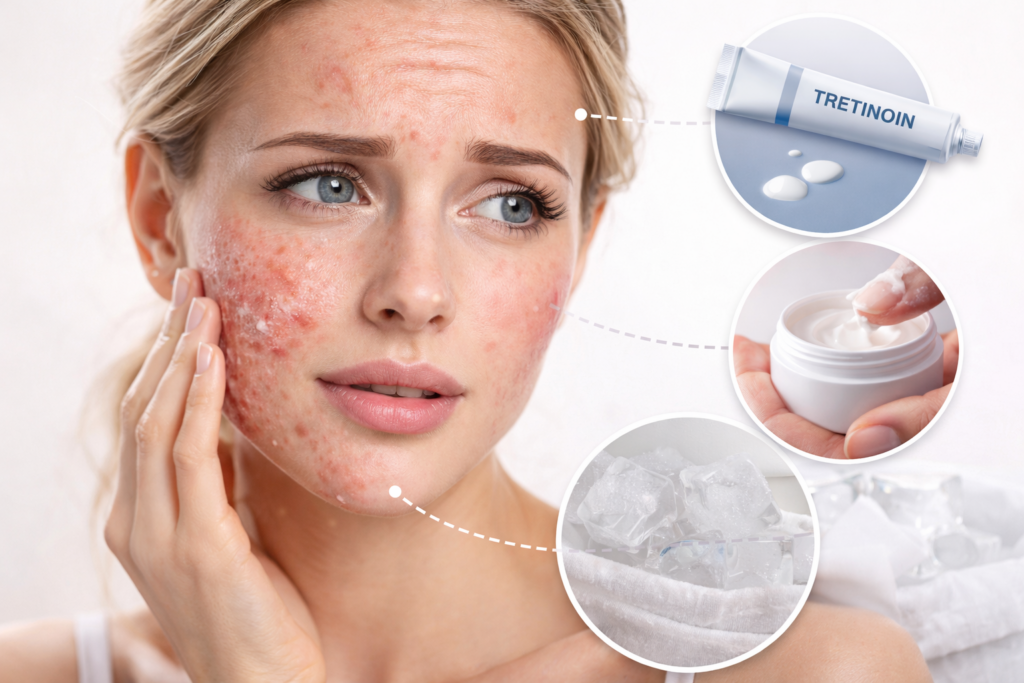
The tretinoin purge involves increased breakouts during the first 4-8 weeks as existing clogged pores surface faster it’s not new acne formation but rather temporary worsening before dramatic improvement. This is the most challenging part of the tretinoin journey, and understanding it prevents quitting prematurely.
Purge vs. Breakout: Purging happens in areas where you typically break out, while true breakouts appear in new areas and may indicate product reaction. Purge breakouts resolve faster (days versus weeks). Purging is normal and expected; new breakout areas may mean irritation.
How Long It Lasts: The purge typically lasts 4-6 weeks but can extend up to 12 weeks for some people depending on the severity of underlying congestion. It will end staying consistent through this phase leads to clear skin.
Dryness and Flaking: This is the most common side effect. Combat it with gentle, fragrance-free moisturizer applied multiple times daily. Consider adding facial oil over moisturizer at night. Hydration is your best friend during tretinoin adjustment.
Redness and Sensitivity: If redness becomes severe, reduce frequency immediately. Use calming ingredients like ceramides and niacinamide. Avoid all harsh products. Your skin barrier needs active support during this time.
Peeling: Do not pick or manually peel flaking skin this causes scarring. Let skin shed naturally. Use gentle exfoliation with a soft washcloth if absolutely needed. Apply extra moisturizer on particularly flaky areas.
Stinging or Burning: Mild stinging initially is normal, but severe burning is not. If discomfort is intense, reduce frequency and apply moisturizer before tretinoin (buffering technique). Some discomfort is expected; pain is not.
Red Flags Requiring Action: Severe, painful irritation; skin cracking or raw areas; extreme sensitivity to all products. It’s better to go slow and succeed than damage your skin barrier trying to push through too fast.
Recovery Protocol: Stop tretinoin for 3-5 days. Focus intensely on barrier repair using ceramides and gentle moisturizer. Resume at lower frequency when healed. Consider using the buffering method when restarting.
Step 1: Gentle Cleanser. Use fragrance-free, non-foaming formulas like CeraVe or La Roche-Posay. Your skin is sensitized gentleness is crucial.
Step 2: Hydrating Serum (Optional). Apply hyaluronic acid or niacinamide which soothes irritation. This adds an extra hydration layer.
Step 3: Moisturizer. Use rich, barrier-repairing formulas with ceramides and peptides. This is a non-negotiable step.
Step 4: Sunscreen (CRITICAL). Apply SPF 30+ broad-spectrum sunscreen daily without exception. Tretinoin dramatically increases sun sensitivity, so skipping sunscreen undoes all benefits and causes serious damage. Use mineral or chemical whichever you prefer and will actually wear.
Cleanse gently, removing all makeup and sunscreen. Pat skin completely dry. Wait 20-30 minutes skin must be totally dry, and this waiting period genuinely matters. Apply pea-sized tretinoin in a thin, even layer. Wait another 20-30 minutes to let tretinoin absorb. Apply generous moisturizer, layering if skin is very dry. Add occlusive like Vaseline or Aquaphor only on very dry areas, not your entire face as this can cause breakouts.
Simply cleanse, apply hydrating serum, and moisturize generously. Give your skin these recovery nights they’re essential.
Never Combine in Same Routine: Other retinoids, AHAs/BHAs like glycolic or salicylic acid, benzoyl peroxide which can deactivate tretinoin, vitamin C which increases irritation risk, physical scrubs, or harsh cleansers. One active treatment at night is sufficient.
Can Use at Different Times: Vitamin C in morning if tolerated, gentle exfoliants on off-nights once skin is adjusted, benzoyl peroxide in morning if needed for acne.
Products That Help Tretinoin Success: Ceramides for barrier repair, niacinamide to soothe irritation, hyaluronic acid for deep hydration, peptides for anti-aging boost, and azelaic acid which can be combined with tretinoin for enhanced hyperpigmentation treatment.
Tretinoin prevents clogged pores, reduces both comedones and inflammatory acne, speeds healing dramatically, and prevents scarring. Realistic results include 50-80% reduction in breakouts, faster healing times, and prevention of new acne formation. It’s not overnight transformation, but it’s genuinely transformative over months. Best practices include potentially combining with benzoyl peroxide in the morning after adjustment, pairing with azelaic acid for stubborn acne, and being patient through the purge phase.
For aging concerns, tretinoin stimulates collagen production, reduces fine lines and wrinkles, improves skin firmness, and prevents future aging. Tretinoin for wrinkles delivers realistic results of 20-40% reduction in fine lines over 6-12 months, noticeably firmer and smoother skin, and ongoing preventative benefits. This is the most evidence-based anti-aging treatment available. Best practices include consistency over years-long use, pairing with religious sunscreen use, and considering 0.05% or 0.1% strength specifically for anti-aging goals.
Tretinoin speeds removal of pigmented cells, inhibits melanin production, evens skin tone, and fades dark spots, melasma, and post-inflammatory hyperpigmentation. Realistic results show significant fading over 3-6 months, more even complexion, and reduced appearance of sun damage. It’s especially effective for post-acne marks. Best practices absolutely require daily sunscreen to prevent darkening, can be combined with azelaic acid or hydroquinone for enhanced results, and require patience pigmentation fades slowly but surely.
1. Starting Too Strong or Too Often: Jumping to 0.1% concentration or nightly use immediately causes severe irritation and often leads to quitting. Start low, go slow this is a marathon, not a sprint.
2. Skipping Sunscreen: Tretinoin increases photosensitivity dramatically. Sun exposure causes hyperpigmentation and damage, completely undoing all tretinoin benefits. Sunscreen is absolutely non-negotiable.
3. Applying to Damp Skin: This dramatically increases irritation and absorption. Wait 20-30 minutes after washing patience prevents serious problems.
4. Using Too Much Product: More is definitely not better with tretinoin. Pea-sized amount is genuinely enough for your entire face. Excess equals wasted product plus unnecessary irritation.
5. Over-Exfoliating: Adding acids or scrubs while your skin is adjusting damages the skin barrier and increases sensitivity. Tretinoin is your exfoliant you don’t need additional exfoliation during adjustment.
6. Giving Up During Purge: Quitting when skin gets worse is the most common mistake. The purge is temporary and normal it’s actually proof tretinoin is working. Pushing through leads to transformation.
7. Expecting Instant Results: Looking for visible change after just one week sets you up for disappointment. Real results take 3-6 months minimum. Patience is genuinely the hardest part.
Tretinoin can be used indefinitely many dermatologists use it for decades providing ongoing anti-aging and maintenance benefits. Think of it as a long-term investment in your skin’s health and appearance.
Frequency Long-Term: Most people use tretinoin 3-5 nights per week long-term, though some tolerate nightly application. Adjust based on your skin’s response and find your personal maintenance sweet spot.
Periodic Breaks: You can take breaks if needed for vacation or skin irritation. Resume when ready benefits don’t disappear immediately, and flexibility is fine.
Combination with Other Treatments: Once adjusted, you can add back gentle actives. Professional treatments like chemical peels or laser require caution always tell providers you use tretinoin before any facial treatment.
Pregnancy Considerations: You must stop tretinoin immediately if pregnant or trying to conceive. It’s absolutely contraindicated during pregnancy and breastfeeding. Discuss safe alternatives with your doctor safety first, and there are other options during this time.
Q: How long until I see tretinoin results?
A: Initial improvements appear around 8-12 weeks, with peak tretinoin before and after results at 6-12 months. The purge happens weeks 3-8, so don’t judge results during this phase. Fine lines may soften by month 3-4, acne improves months 2-4, hyperpigmentation fades months 3-6. Patience and consistency are absolutely essential this is not a quick fix.
Q: Can I use tretinoin every night from the start?
A: No. Start with 2 times per week for 2 weeks, then slowly increase frequency over 2-3 months. Jumping to nightly use causes severe irritation, damaged skin barrier, and often leads to quitting. Your skin needs time to adjust through retinization. Even long-term users don’t all use it nightly find your ideal frequency.
Q: Will the purge definitely happen to everyone?
A: Not everyone experiences the tretinoin purge, but most people with underlying acne or clogged pores will purge to some degree. If you have clear skin and are using tretinoin only for anti-aging, you may skip the purge entirely. Purging typically lasts 4-8 weeks. If breakouts continue beyond 12 weeks or appear in new areas, it may be irritation rather than normal purging.
Q: Can I use tretinoin around my eyes?
A: Not directly on the delicate eye area it’s too sensitive for direct tretinoin application. However, tretinoin migration still benefits the eye area naturally. Apply it to your face normally, and small amounts will migrate to help with fine lines. For targeted eye treatment, discuss eye creams with retinol or prescription options with your dermatologist.
Q: What if my skin is too sensitive for tretinoin?
A: Try these strategies: start with the lowest 0.025% strength, use the sandwich method (moisturizer-tretinoin-moisturizer), apply only 1-2 times weekly, or switch to Retin-A Micro for gentler time-release formula. If still too irritating, consider adapalene (less irritating retinoid) or over-the-counter retinol. Not everyone tolerates prescription-strength retinoids, and that’s completely okay.
Q: Should I stop tretinoin before waxing or procedures?
A: Yes, absolutely. Stop tretinoin 5-7 days before waxing, chemical peels, laser treatments, or dermaplaning. Tretinoin temporarily thins skin, dramatically increasing risk of damage. Restart 7 days after the procedure. Always inform estheticians and dermatologists that you use tretinoin before any facial treatment.
Q: Does tretinoin work for body skin (chest, hands, neck)?
A: Yes! Tretinoin can be used on neck, chest, and hands for anti-aging benefits. These areas are also prone to sun damage and benefit significantly from tretinoin. Start even more slowly on these areas they’re more sensitive than facial skin. Always use sunscreen on all treated areas. Hands especially benefit from long-term retinoid use.
The tretinoin before and after transformation is real, dramatic, and backed by decades of rigorous scientific research but it requires patience, consistency, and proper technique to achieve safely. From managing the initial purge to achieving that radiant, fashion-forward glow months later, every phase of your tretinoin journey serves a crucial purpose in revealing your healthiest, most beautiful skin. Remember: start slow with low strength and infrequent application, protect religiously with daily sunscreen, moisturize generously to support your skin barrier, and trust the process even when results aren’t immediately visible. The retinoid transformation results speak for themselves in countless before and after photos. Consult with a board-certified dermatologist to get your prescription, follow the guidelines in this article carefully, and prepare for compliments on your transformed skin. Your tretinoin glow awaits are you ready to begin this journey?
You will also like the lip flip before and after.


Kesha Smith is a lifestyle blogger passionate about simple living, healthy habits, and everyday inspiration. On this website, you’ll find