your Fashion , food , lifestyle in one place
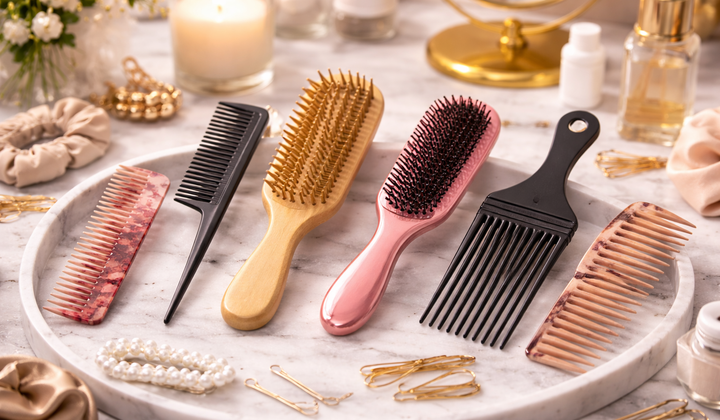
I never think much about combs until I realize how much damage the wrong one causes to my hair. That cheap plastic comb I grab at the drugstore? It breaks my hair, creates static, and makes detangling a nightmare. For years, I assume all combs serve the same basic function running through hair to smooth it. Then one day, my stylist asks what comb I use at home, and I shrug. She shows me her collection: wooden combs, wide-tooth combs, metal styling combs, each with a specific purpose. That conversation opens my eyes to an entire world of hair care I ignore for decades.
Once I learn about the different types of combs their materials, tooth spacing, and specific purposes my entire hair care routine transforms. I stop breaking hair during detangling. Static electricity disappears from my winter styling routine. My curls maintain their shape instead of turning into a frizzy mess. The difference is so dramatic that I want everyone to understand what I now know about comb selection.
In this guide, I share everything I learn about types of combs so you can make the right choice for your hair texture, styling needs, and daily routine. Whether you have thick curly hair, fine straight strands, or anything in between, the perfect comb exists for you. Trust me, the right comb makes all the difference. Let me walk you through what I discover through years of trial, error, and finally getting it right.
I spend years using whatever comb I find in my bathroom drawer, never thinking twice about it. Sometimes I grab my partner’s comb. Other times I use that free plastic one from a hotel. My hair is just hair, right? Any comb works the same way. Then I notice my hair breaks more, tangles worse, and looks frizzy even after I style it carefully. I see split ends multiplying. My once-healthy hair starts looking dull and damaged. The problem? My comb choice.
Different hair textures require different tooth spacing this is fundamental knowledge I lack for too long. Materials affect static, breakage, and overall hair health in ways I never imagine. The wrong comb causes damage I might not notice immediately, but over months and years, the cumulative effect shows clearly. Meanwhile, the right comb makes styling easier, faster, and gentler on my hair and scalp. I see immediate improvement when I switch to the proper comb for my hair type, and this motivates me to learn everything I can about hair comb types.
What changes in my routine? Less breakage when I detangle wet hair. Better product distribution from roots to ends. Smoother styling results that last longer throughout the day. Healthier hair over time as I stop causing daily micro-damage. The transformation surprises me and I promise it will surprise you too. My hair looks shinier, feels stronger, and grows longer than it has in years. All because I finally choose the right tools.
You will also like the how long do lipsticks last.
Tooth spacing is the first thing I look at when I choose a comb. Here’s what I find works best through extensive testing:
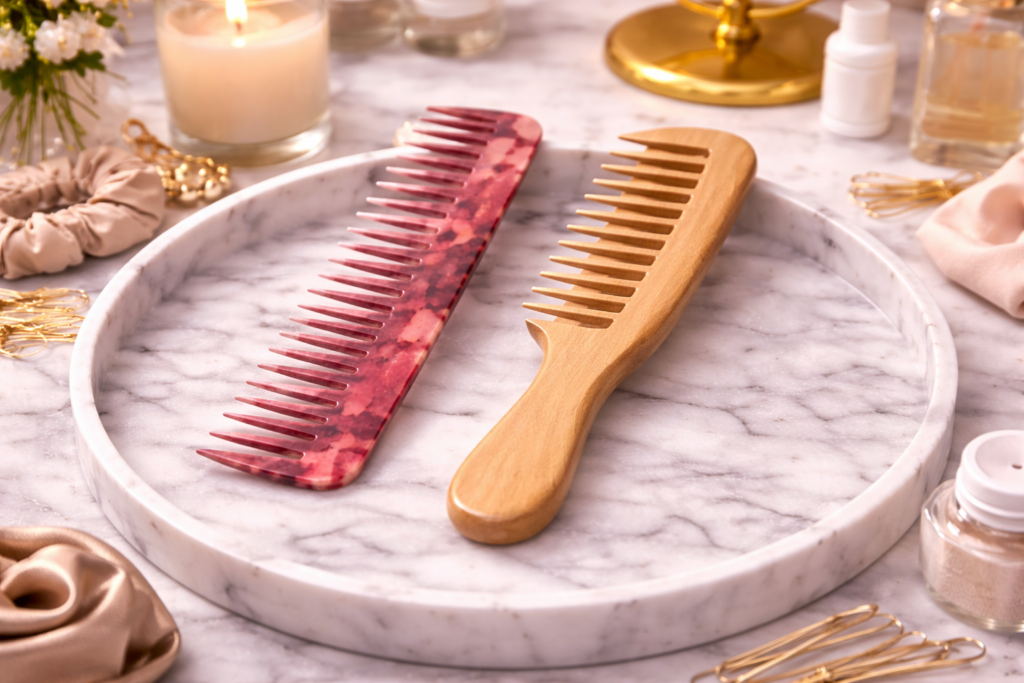
Wide-Tooth Combs remain my absolute favorite for daily wet hair care. These combs have teeth space far apart usually five to ten millimeters between each tooth. Large gaps allow hair to pass through easily without catching or pulling. The teeth are typically thick and sturdy, resisting breakage even when I work through tough tangles.
I use wide-tooth combs primarily for detangling wet hair, which becomes my go-to moment for this tool. I also reach for them when working through curly, thick, or textured hair that needs gentle handling. In the shower, I use a wide-tooth comb to distribute conditioner or deep treatments evenly from roots to ends. After I apply leave-in products, this comb helps spread them without disrupting my natural texture. This is honestly the gentlest comb I own I reach for it daily without fail.
For hair types, curly hair benefits most because wide teeth prevent disrupting the curl pattern I work so hard to maintain. Thick hair finds relief because this is often the only comb that glides through without pain or excessive pulling. Even fine hair when wet needs this gentle approach to reduce breakage vulnerability. Natural and textured hair considers this an essential tool, not optional. My top tip: I never, ever comb curly hair dry with anything other than a wide-tooth comb trust me on this one. I learn this lesson after ruining too many good hair days.
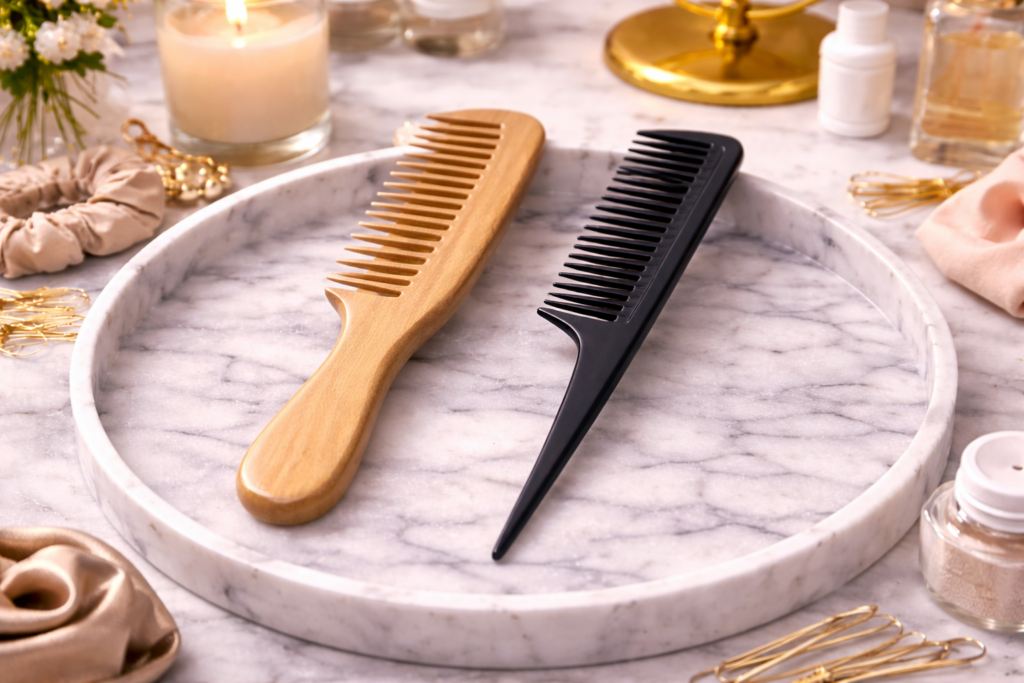
Medium-Tooth Combs provide moderate spacing, usually two to five millimeters between teeth. This versatile middle ground makes them the most common type. Most “standard” combs you see fall in this category, which explains their popularity. I use medium-tooth combs for general daily combing on dry hair, light detangling when my hair is slightly damp, regular styling and shaping, and backcombing when I want volume. My everyday comb lives in my bag it’s always this type because it handles most situations adequately.
These combs work best for normal to slightly thick hair, wavy hair that isn’t too dense, and straight to slightly textured hair that doesn’t tangle severely. Most people find this spacing works well for regular maintenance without special considerations. I keep one in my bathroom, one in my car, and one in my work desk because I use them constantly.
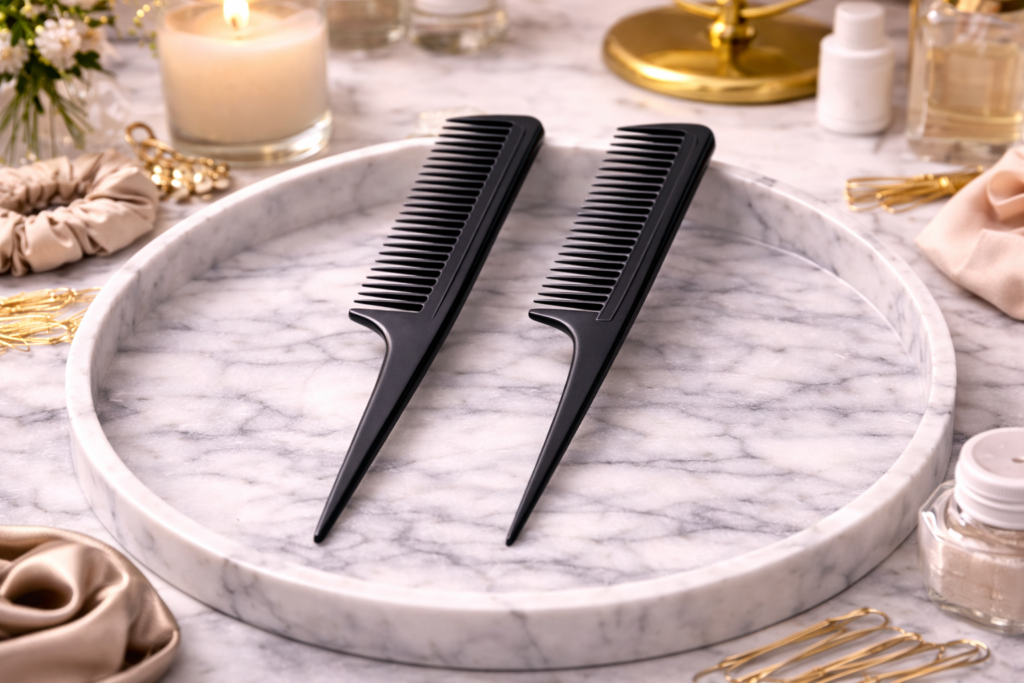
Fine-Tooth Combs feature teeth very close together one to two millimeters or even less. Delicate and precise, these teeth often appear on smaller, more detailed combs. I use fine-tooth combs specifically for creating precise parts in my hair, smoothing flyaways and baby hairs around my face, teasing or backcombing for volume when I need it, finishing touches on updos and formal styles, and detail work around my hairline. I reserve this type strictly for styling, never detangling, because forcing it through tangles guarantees breakage.
Fine-tooth combs suit fine, straight hair when I need smoothing, though any hair type can use them for finishing touches. However, I absolutely do not recommend them for thick or curly hair during regular combing this causes breakage and frustration. My warning comes from experience: I learn the hard way that fine-tooth combs on thick or curly hair equal disaster. Save these for precision work only, not daily maintenance.
Here’s how I decide in any situation: wide-tooth for detangling, medium-tooth for daily use, fine-tooth for precision styling. Simple as that. This decision tree saves me from overthinking and consistently leads to the right choice.
The material your comb is made from matters just as much as tooth spacing. Here’s what I discover through trial and error:
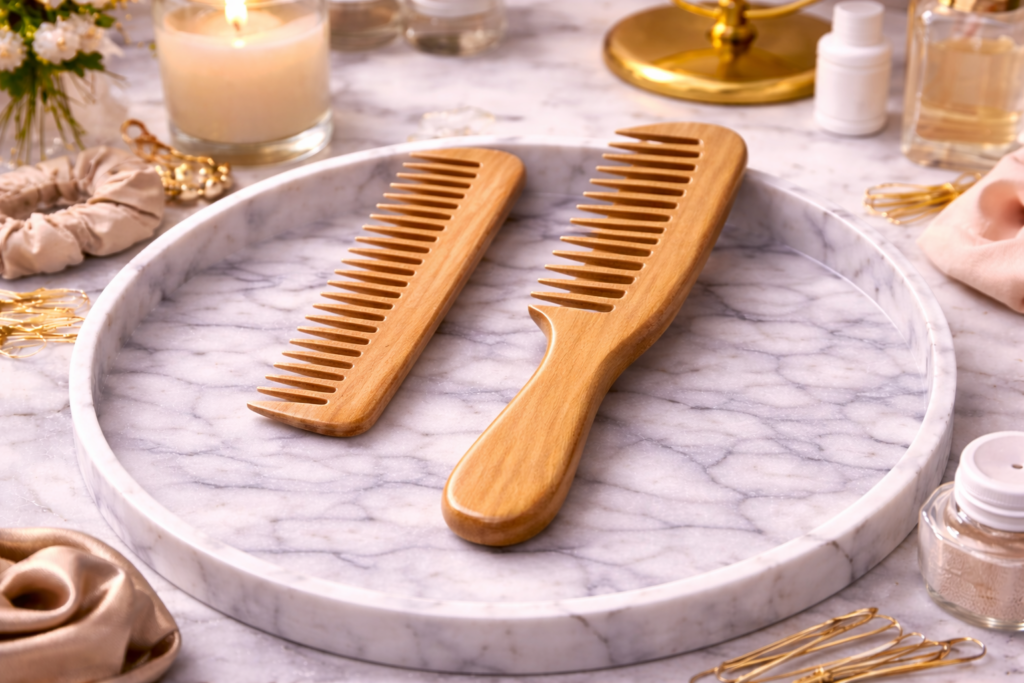
Wooden Combs become my absolute favorite material after I try my first quality wood comb. Natural wood varieties include bamboo, sandalwood, and olive wood, each bringing slightly different benefits. What I love most: no static whatsoever this changes everything for me during dry winter months. Wood is gentle on both hair and scalp, never pulling or scratching. These combs distribute natural oils from my scalp through the length of my hair, promoting overall health and shine. They’re eco-friendly and sustainable, which aligns with my values. Plus, they have a beautiful, artisanal feel that makes my daily routine feel more luxurious.
I use wooden combs for daily combing on dry hair, gentle detangling when needed, smoothing and styling throughout the day, and even scalp massage while I comb. This is my favorite material, hands down, and I recommend everyone try at least one quality wooden comb. The drawback? They cost more than plastic alternatives. They require some care I oil mine occasionally with natural wood oil. They can crack if I leave them in moisture too long, so I keep mine away from the shower. Worth the investment if you treat them right.
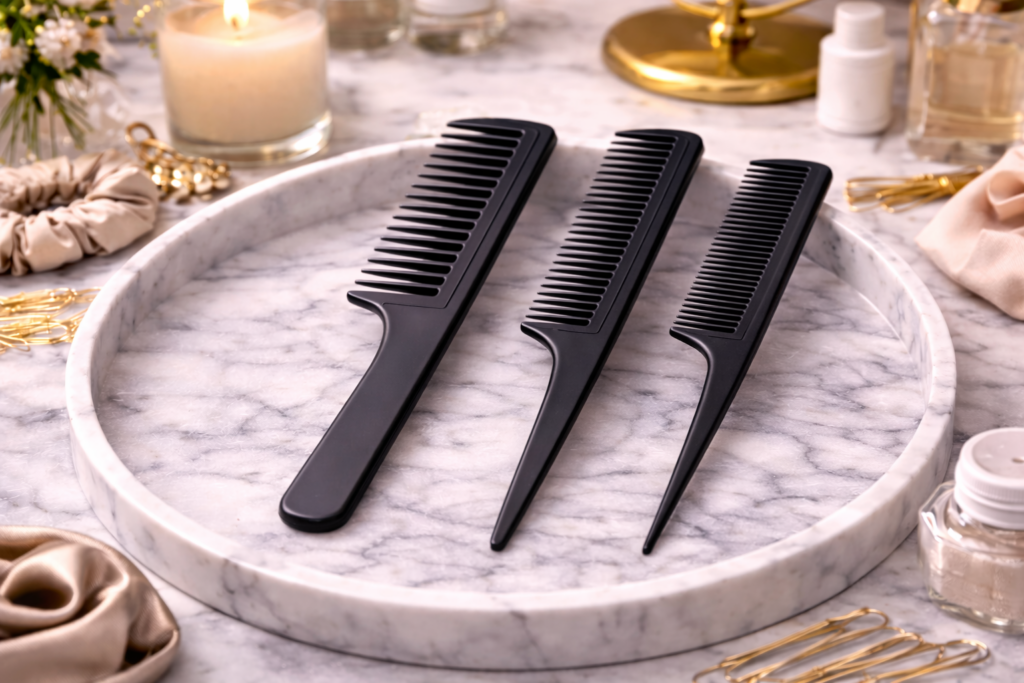
Plastic Combs offer affordability and wide availability everywhere. They’re easy to clean and sanitize thoroughly, which I appreciate. Durable plastic combs, assuming decent quality, work fine for basic combing needs. I keep these as backup combs in various locations car, gym bag, travel kit. The issues I notice: plastic creates static electricity that drives me crazy in winter. Cheap plastic can snag and break hair if seams are rough or quality is poor. They’re simply not as gentle on hair as natural materials. My advice: check for seamless construction because rough edges destroy hair one stroke at a time.
I use plastic combs primarily for travel since I don’t worry if I lose them, wet combing especially in the shower where wood shouldn’t stay, and situations when I need to sanitize thoroughly with hot water or alcohol. They’re a practical choice even if not my favorite for daily use.
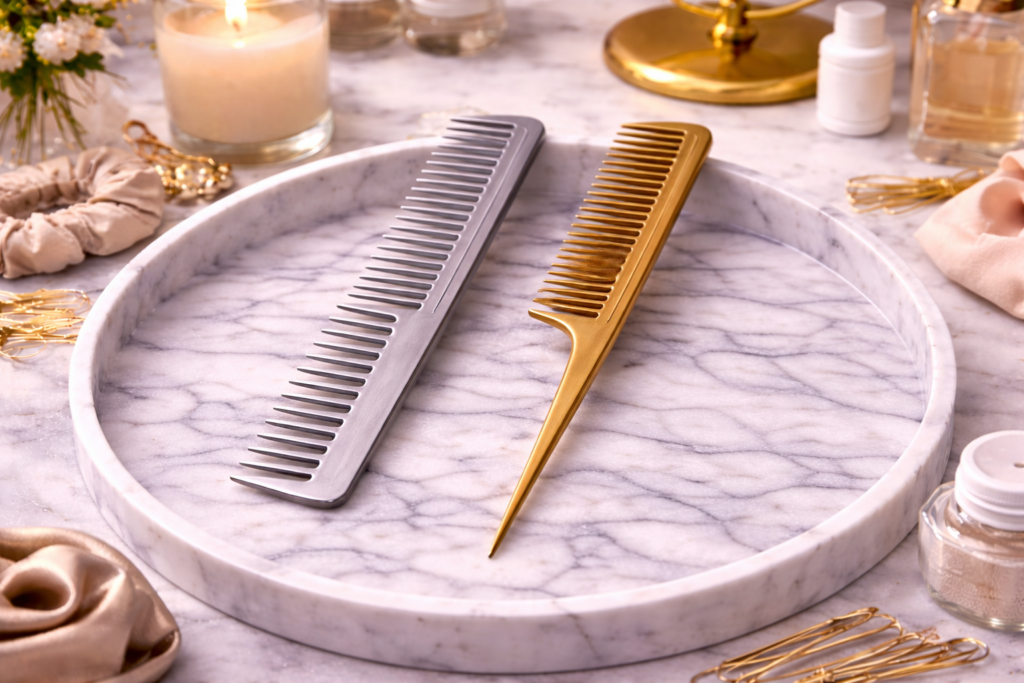
Metal Combs offer extreme durability my metal comb lasts for years without any deterioration. The teeth stay precise and never bend, no matter how much pressure I apply. Metal combs excel for heat styling because they conduct heat from blow dryers effectively. Very thin, precise teeth become possible with metal construction. I can sanitize metal combs completely without worry. I reach for metal combs during heat styling with my blow dryer since they help distribute heat evenly, precision parting when I need perfectly straight lines, professional styling situations where appearance matters, and teasing or backcombing that requires a comb to hold up under pressure.
My caution: metal can get quite hot when blow-drying I learn to be careful after burning my scalp once. Metal feels harsh for daily gentle combing. It can feel uncomfortable on sensitive scalps compared to wood or quality plastic.
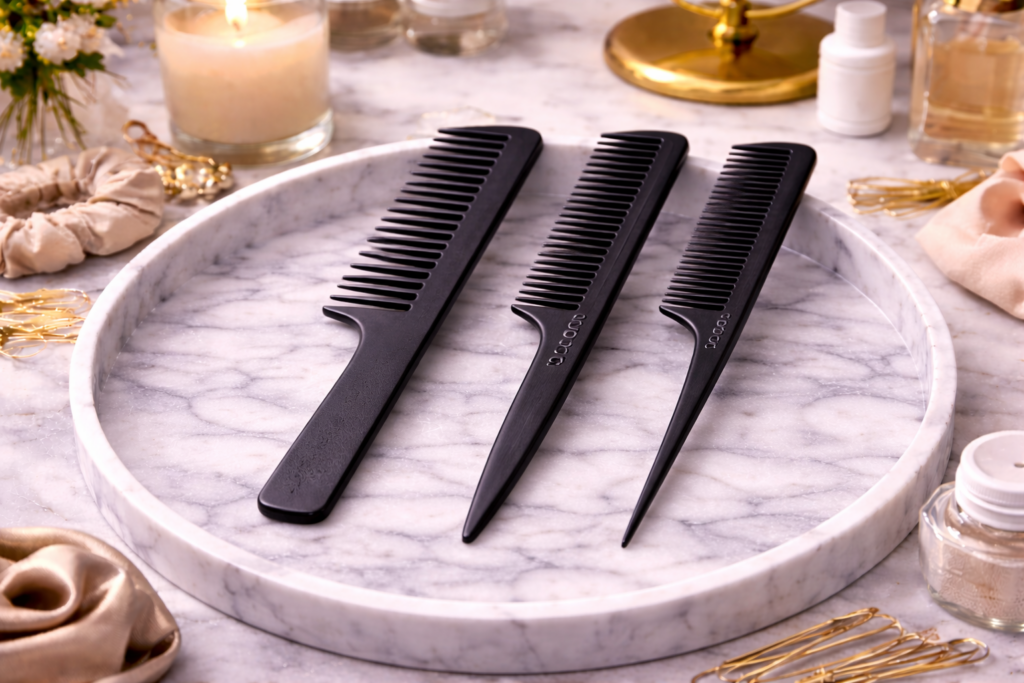
Carbon Fiber Combs represent the modern high-tech option I discover more recently. These combs resist heat perfectly for styling work, offer anti-static properties similar to wood, remain lightweight but incredibly strong, and resist chemicals from hair products and treatments. I like carbon fiber combs because they combine benefits of several materials into one tool, offer professional quality results, and last for years without degradation. If I want to invest in one premium comb for all-purpose use, carbon fiber makes tremendous sense. The downside: they cost more than other options and aren’t as readily available in regular stores. You get what you pay for with these combs, though, and the investment pays off.
My material recommendation after trying everything: I own one wooden comb for daily use, one wide-tooth plastic comb for wet hair, and one carbon fiber comb for heat styling. This combination covers all my needs without overwhelming my bathroom drawer with redundant tools.
Beyond basic combing, I discover specialty combs that design for specific purposes. Here are the ones I find most useful:
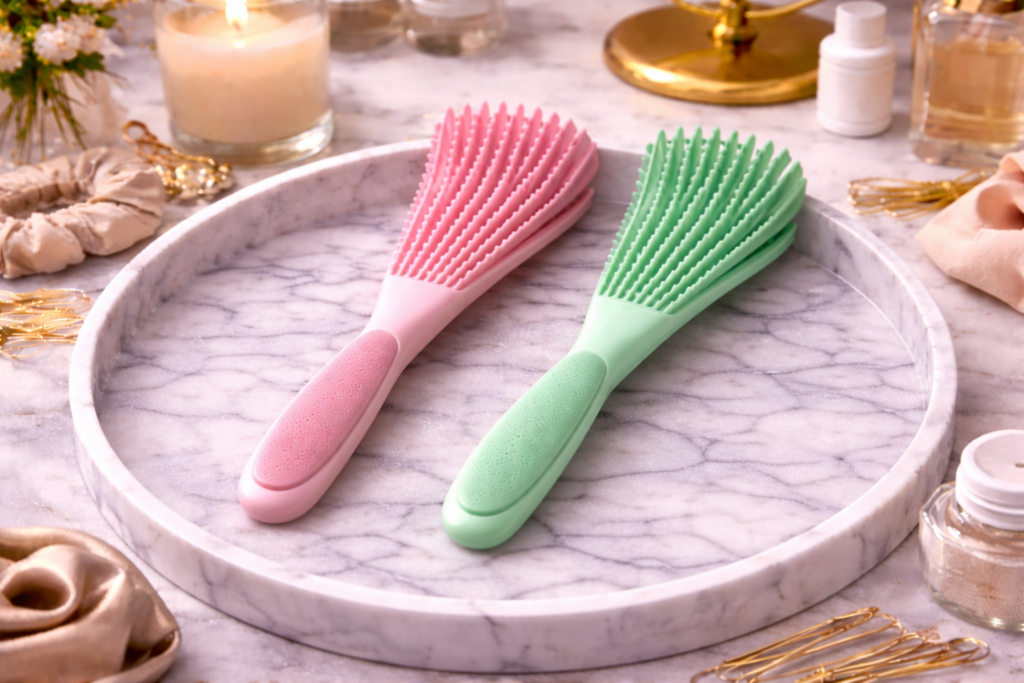
Detangling Combs feature wide teeth with rounded tips that don’t scratch or damage. The teeth flex and bend to reduce breakage when they encounter knots. Many have ergonomic handles that give me better grip and control. Some designs use varying tooth lengths to work through different layers simultaneously. I use detangling combs as my first step after washing hair, working through knots gently and systematically, starting from ends and working up to roots carefully. This approach saves me from ripping through tangles a total game changer. These combs benefit anyone with tangling issues, long hair that knots easily, curly or textured hair that tangles when wet, and children’s hair where gentle approach prevents tears.
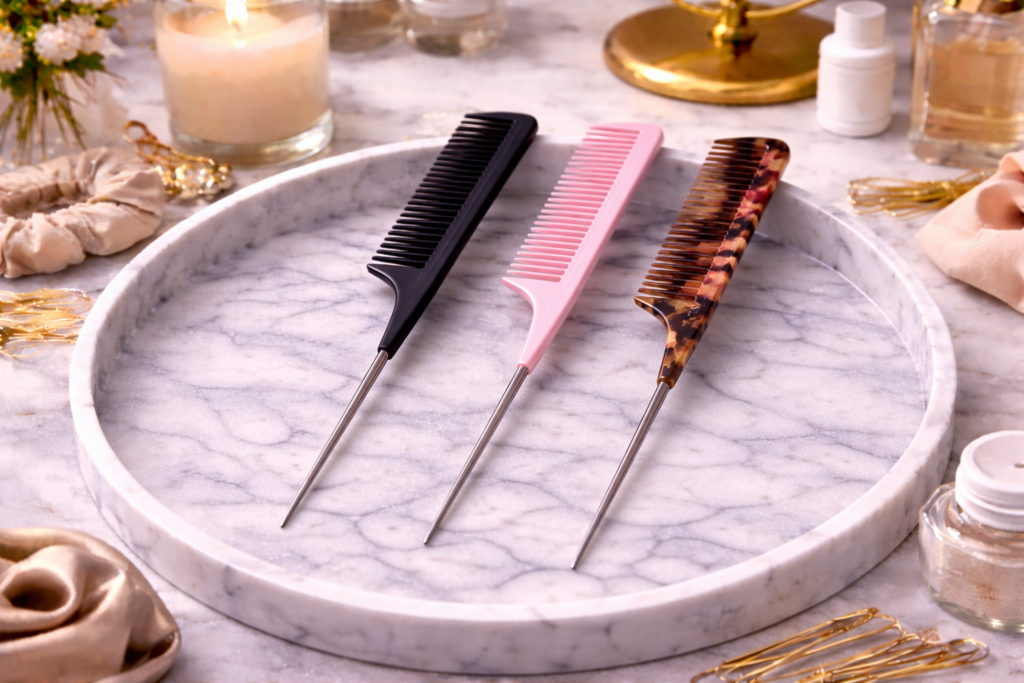
Rat Tail Combs have fine teeth on one end and a long, thin metal or plastic “tail” on the other end. The tail can be straight or slightly curve depending on design. I grab my rat tail comb when creating precise parts in my hair, sectioning hair carefully for coloring or intricate styling, teasing roots for volume in specific areas, and lifting and separating individual strands. Every updo I create starts with this comb because the precision it offers surpasses any other tool. The tail makes sectioning absolutely effortless, and I feel like a professional stylist when I use this specialized tool.
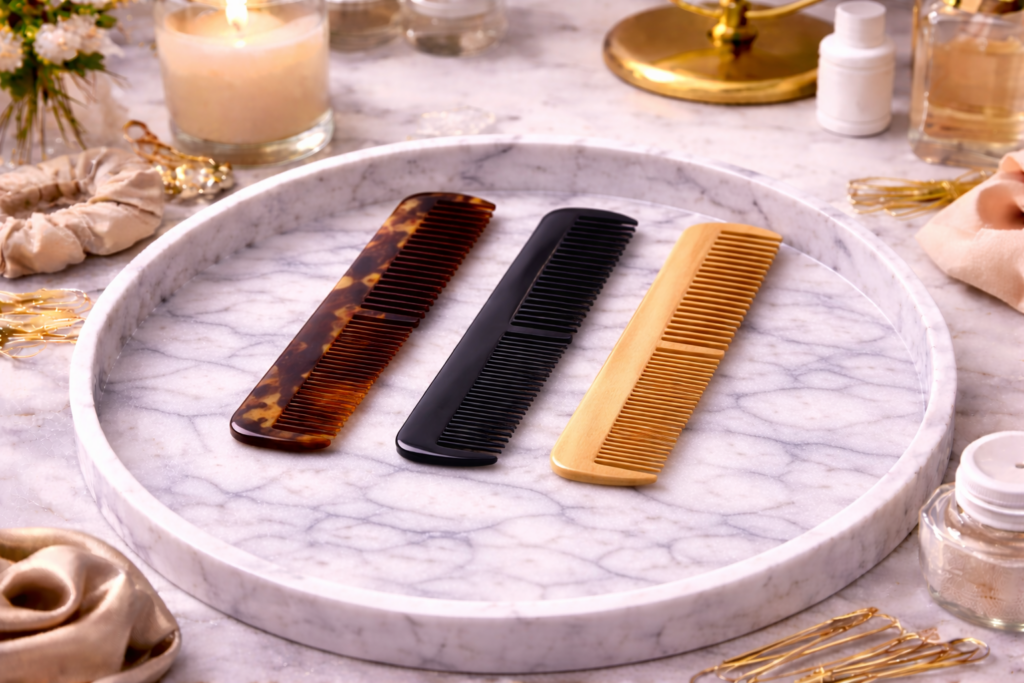
Pocket Combs offer small, compact size that literally fits in a pocket or purse. Usually folding or with a protective case, these combs prevent damage during transport. They typically have fine to medium teeth and durable construction for carrying everywhere. My pocket comb travels as my constant companion always in my bag for quick touch-ups throughout the day, post-gym smoothing when I need to look presentable, and emergency styling situations. I never leave home without one because you never know when you’ll need it.
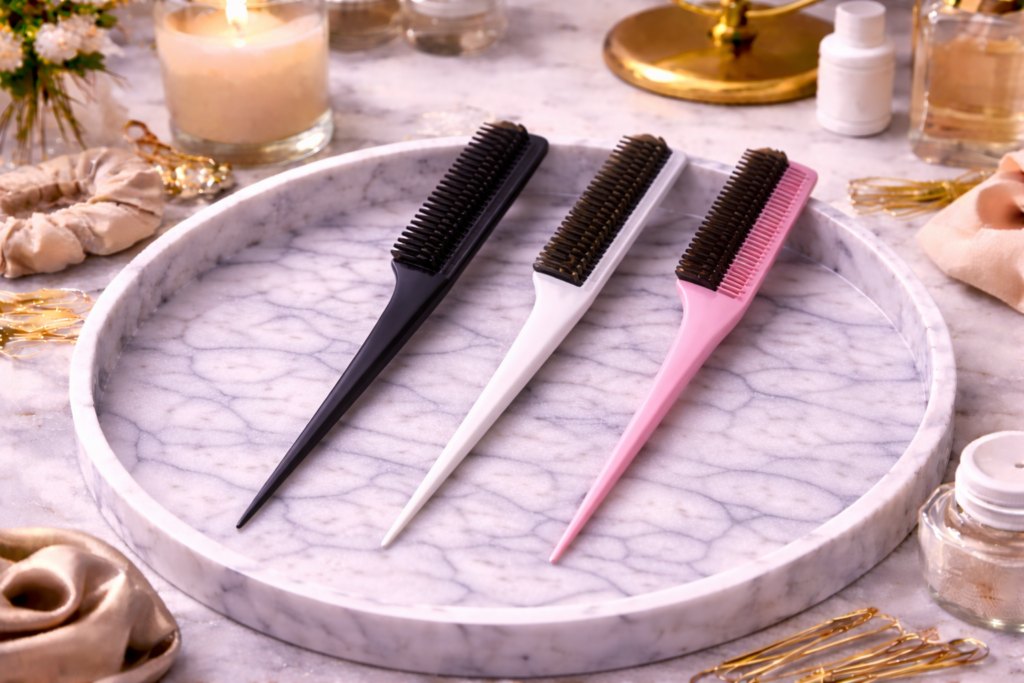
Teasing or Backcombing Combs have fine, closely-space teeth, often in three rows for maximum effect. Thin and precise in design, these combs stay strong enough to withstand the pressure of backcombing. I need them when creating volume at roots, building structure in updos that need to stay in place, attempting 1960s-inspired styles, and adding height to hairstyles for special occasions. Use these sparingly because they can be aggressive on hair with repeated use.
Pick Combs, also known as Afro picks, feature long, widely-space metal or plastic prongs with the handle perpendicular to teeth. The fist-grip design allows controlled lifting and shaping. These combs lift and shape natural hair texture beautifully, add volume to afros and curls without disruption, and separate curls without destroying the natural pattern. This is a specialized tool I respect but don’t personally need for my hair texture. I include it because it’s absolutely crucial for many people with textured hair no substitute exists for this purpose.
Styling or Cutting Combs have long, thin designs with an extended handle, fine and precise teeth throughout, and sometimes measurements mark along the edge. They have a professional appearance that makes me feel capable. I use styling combs for at-home trims when measuring hair length matters, blow-dry styling for sleek results, creating smooth and polished looks for special events. They make me feel like I’m in a professional salon even in my bathroom.
After trying dozens of different combs over the years, here’s my simple decision process that works every time:
Step One: I Consider My Hair Texture First. Thick or curly hair needs wide-tooth combs always, without exception. Medium or wavy hair works well with medium-tooth for daily use and wide-tooth when wet. Fine or straight hair can handle medium to fine-tooth spacing depending on the specific purpose. I match tooth spacing to my hair density first because this is the most critical factor.
Step Two: I Think About the Task at Hand. Detangling requires wide-tooth or specialized detangling combs. General styling uses medium-tooth or standard styling combs. Precision work demands fine-tooth or rat tail combs. Heat styling calls for metal or carbon fiber materials specifically. Purpose drives my choice more than anything else \what I need to accomplish determines which comb I grab.
Step Three: I Choose Material Base on My Specific Needs. Daily gentle combing gets wooden combs because I prefer them. Wet hair gets plastic combs for practical reasons. Heat styling requires metal or carbon fiber for functional benefits. Travel situations call for plastic pocket combs since I can replace them if lost. I own multiple combs because different situations genuinely need different materials and approaches.
Step Four: I Always Check Quality Before Purchase. I look for smooth, seamless construction with absolutely no rough edges. Detangling combs should have flexible teeth that give slightly under pressure. The grip needs to feel comfortable in my hand. The comb must be sturdy enough for my hair thickness without bending. I run my finger along the teeth if it feels rough or catches, I pass on that comb immediately.
My current collection includes exactly five combs: one wooden wide-tooth for daily favorites, one plastic detangling comb for shower use, one carbon fiber styling comb for heat work, one rat tail comb for precision styling, and one pocket comb that stays in my purse always. Five combs cover one hundred percent of my needs I don’t need more cluttering my space.
How do I know if my comb damages my hair?
I check for several clear signs: if I see breakage after combing sessions, if my comb snags or pulls uncomfortably, if it creates lots of static electricity, or if rough edges feel scratchy on my scalp. I also examine the comb itself rough seams, sharp teeth tips, or inflexible teeth usually mean trouble. When I find the right comb, it glides through my hair smoothly without pulling or breaking strands. The experience should feel gentle, not like a fight.
Can I use the same comb for wet and dry hair?
I personally avoid this practice for best results. Wet hair is significantly more vulnerable to damage, so I use only wide-tooth or detangling combs when my hair is wet. For dry hair, I switch to medium-tooth or styling combs appropriate for my needs. Using a fine-tooth comb on wet hair guarantees breakage I learn this lesson the hard way after damaging my hair repeatedly.
How often do I need to replace my comb?
I replace plastic combs when I notice teeth breaking or rough edges developing, usually about yearly. My wooden combs last much longer several years with proper care and occasional oiling. Metal and carbon fiber combs last even longer, potentially decades. I clean all my combs monthly to extend their life and maintain hygiene.
Why do some combs create so much static in my hair?
Plastic combs are the main culprit for static, especially during dry winter months. When I switch to wooden or carbon fiber combs, my static issues disappear almost completely. The material makes a huge difference in electrical charge natural materials simply don’t generate the same static that plastic creates through friction.
I start my comb journey thinking all combs are basically the same tool. I’m so wrong about this assumption. Understanding the different types of combs their tooth spacing, materials, and specific purposes transforms how I care for my hair completely. Now I choose combs intentionally, and my hair thanks me for it with better health, less breakage, and easier styling.
You don’t need a dozen combs cluttering your bathroom. I recommend starting with just three essential tools: a wide-tooth comb for detangling, a medium-tooth comb for daily styling, and one specialized comb for your specific needs. Invest in quality materials that feel good in your hand and treat your hair gently rather than buying every cheap comb you see.
Your perfect comb is out there waiting. Now you know exactly how to find it.
You will also like the Are leggings still in style.


Kesha Smith is a lifestyle blogger passionate about simple living, healthy habits, and everyday inspiration. On this website, you’ll find